Halton County and Temperance
Contributed by John McDonald
Halton County has had an association with brewing and distilling since its creation. Important ingredients such as wheat and barley, as well as sparkling water in local streams, were abundant in Halton. In very early days of settlement, taverns were often the largest building in the township. As a result most political meetings and elections were held in taverns before municipal structures had been built. When Halton became independent and separated from Wentworth County, the provisional council meeting was held at Thompson’s Inn in Milton in 1853
There were several very small breweries in Halton but the most prominent appears to have been Brain’s Brewery situated on the 9th Line, Esquesing Township, near Hornby. John Brain brought with him brewing skills from England and by 1832 started supplying many of the taverns and hotels in Halton County with quality ale. The operation closed in 1916 when prohibition was legislated in Ontario and never opened again. (A few fortunate collectors have embossed Brain Brewery bottles in their collections!)
Without the modern conveniences of today, such as machinery and appliances, life was very difficult and labourers especially depended on some form of alcohol as a reinforcement. Excessive drinking and drunkenness was very common. The courts and magistrates throughout the county were constantly dealing with vagrants, domestic problems and violations all related to excessive drinking. The three hangings that took place in Halton (1858, 1862 and 1883) were all murder charges and alcohol was involved in each case. In response, a number of measures were taken by government to deal with the problem. The Dunkin Act (1864), the Crooks Act (1876), the Scott Act (1878) and the Ontario Temperance Act (1916) attempted to address the problems and respond to social pressure. Halton had endorsed the Dunkin Act in 1864 but it was quashed by the courts on a technicality. In 1878 Halton County became the first in the province to pass the Scott Act (also known as The Canada Temperance Act). All eyes were on Halton to determine whether the liquor restrictions would work.
Looking through local newspapers during this period confirms temperance and prohibition laws were not successful. Public drunkenness actually increased. Violence also increased with threats to both temperance supporters and anti-temperance supporters. Business owners and professionals who supported temperance had rocks thrown through their windows. A hotel stable was burned to the ground. Portable stills were discovered in the escarpment area of Halton and barrels of “vinegar” were found to be filled with whiskey at some of the smaller railway stations.
As early as the 1830s various movements were created to counter alcohol-related problems and to prohibit the sale and consumption of alcohol. The Oakville Temperance Society was formed in 1834 and nine years later Oakville had built the first Temperance Hall in the province. Within a few years virtually every village, no matter how small, had some form of Temperance Society and a meeting hall which often doubled as a community hall. Several temperance movements, most originating in the United States, had crept into Canada and were created throughout Halton. The Sons of Temperance formed in New York City in 1842, the Royal Templar Society formed in Buffalo, NY. in 1870 and the Woman’s Christian Temperance Union (WCTU), formed in Ohio in 1874 became well established in Halton County. Sarah Bowes, a young Milton teacher of pioneer stock, was active in the local movement and went on to become leader of the WCTU in British Columbia.
Although temperance organizers gave the impression the movement was a success, it was evident the opposite was true. William Panton Jr. (a native of Kilbride), and editor of the Canadian Champion in Milton for 45 years, took every opportunity to reveal the failure of temperance. For many years lines of copy in his newspaper were devoted to challenging the temperance forces and disclosing the ineffectiveness of the temperance measures in Halton County. Panton was not afraid to take on the local liquor inspectors and in 1887 was arrested for contempt of court and actually spent time in the county jail (for a very short period) while fighting against, what he considered, the unjust handling of the liquor laws by Halton’s Head Inspector William Young.
In 1916 the province passed the Ontario Temperance Act which prohibited the sale of alcohol ensuring grains were available for food—not liquor. After World War Two soldiers were returning from the UK and Europe upset they couldn’t get a drink after fighting for freedom. It was clear prohibition wasn’t working and government was losing much needed revenue. Ontarians were tired of the temperance movement and prohibition. The Liquor Control Act which emphasized “moderation” not “prohibition” was passed in 1927. Experimental liquor stores (LCBO stores) were opened in just 18 communities in the province but it wasn’t until 1949 that Halton had its first LCBO outlet in Oakville. (Burlington, Georgetown and Milton stores opened in 1956 and 1962 in Acton.)
Today there are 628 LCBO across the province serving most communities. Halton Region presently has eighteen outlets.
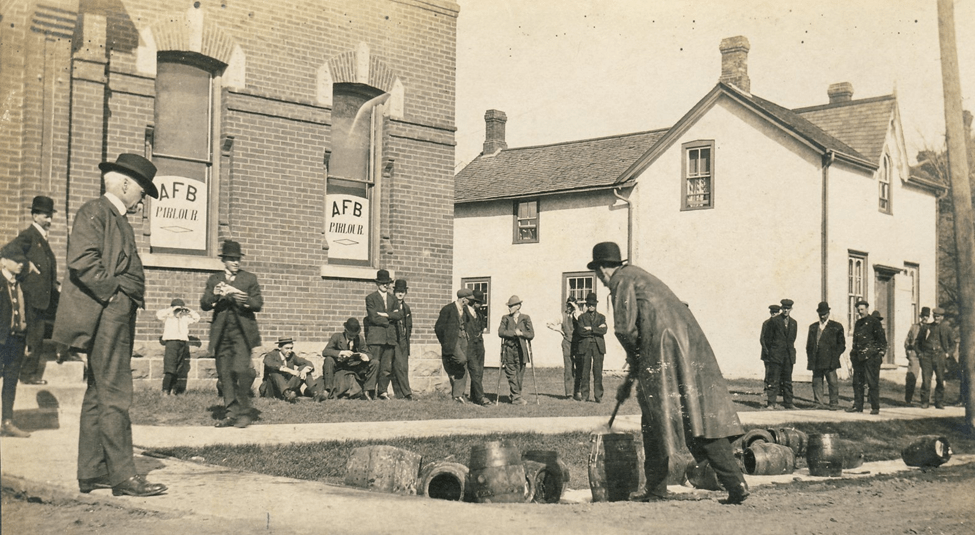
Kegs of beer being destroyed in Acton May 1911 after a raid at the Dominion Hotel.
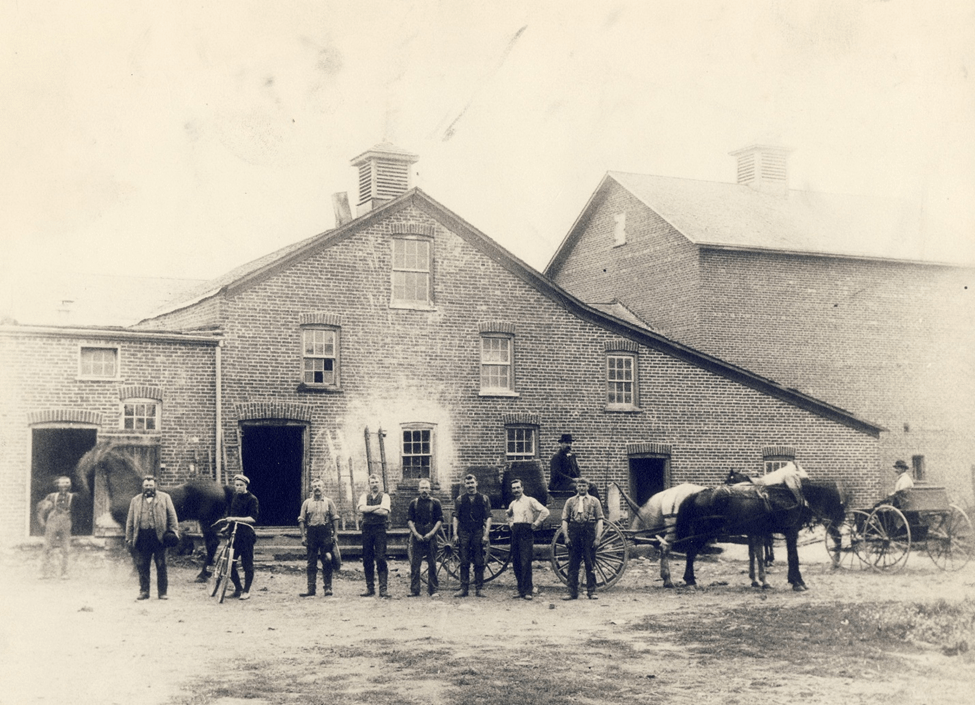
Brain Brothers Brewery near Hornby established in the 1830s.
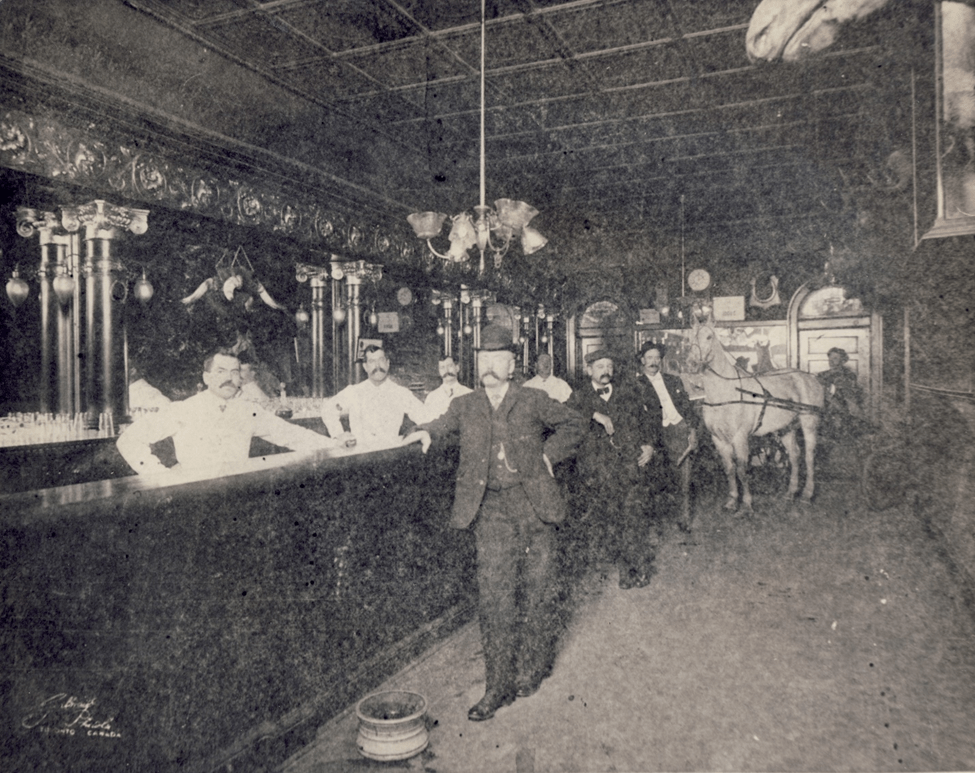
Thomas J. Hill’s Hotel in Glen Williams was a popular drinking establishment.
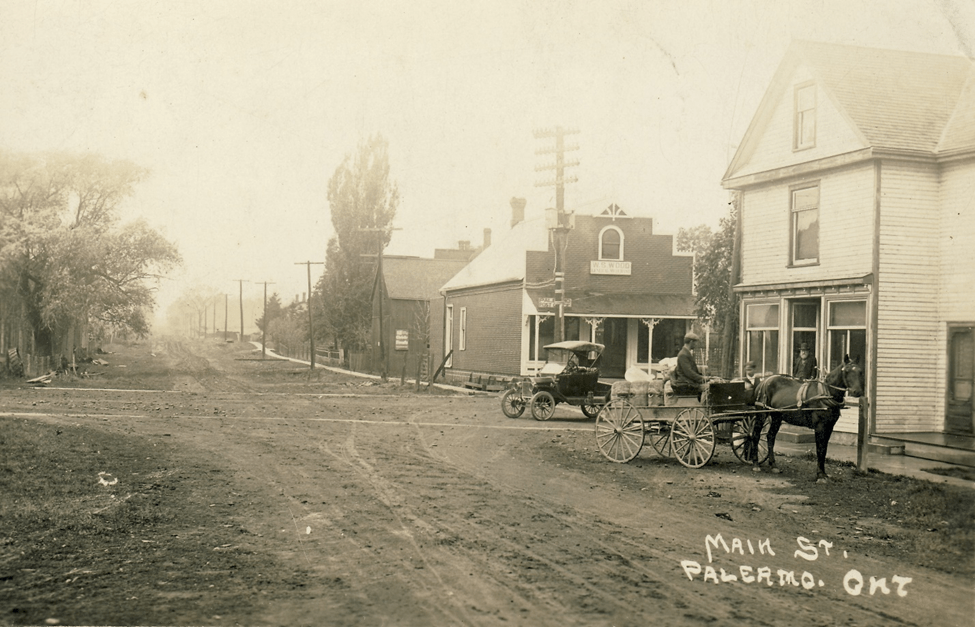
Palermo, at the intersection of Dundas Street and Bronte Road, was an important stage coach stop where horses were changed and passengers were able to stretch their legs at the village’s hotels.
 Kilbride History Group